
Introduction The Rising Importance of Strategic Procurement
In today’s volatile business environment, strategic procurement management and cost optimization have become critical priorities for companies worldwide. Gone are the days when procurement was seen as a back office function focused merely on placing orders and squeezing suppliers on price. Modern organizations recognize that what and how they buy directly impacts everything from cost and cash flow to innovation and sustainability. In fact, chief procurement officers who successfully navigated recent supply disruptions and market uncertainties have become indispensable partners to the executive suite. As one manufacturing leader put it, procurement has never before been core to so many executive committee level priorities. Business leaders increasingly view procurement as a strategic contributor to competitive advantage and resilience, rather than just a tactical cost cutter. This introduction sets the stage for understanding why strategic procurement is so important today and how it can drive not only cost savings, but also long-term value creation across the organization.
Aligning Procurement Strategy with Organizational Goals
For procurement to be truly strategic, it must be tightly aligned with the broader goals of the business. A well-defined procurement strategy ensures that sourcing and supplier decisions support key organizational objectives whether that is fueling growth, driving innovation, managing risk, or meeting sustainability targets.
In practical terms, aligning procurement with company goals means connecting to the mission and performance metrics. Procurement initiatives should tie directly into the company’s mission and key results. For example, if a company prioritizes customer experience, procurement might emphasize high quality, reliable suppliers. If sustainability is a core value, procurement will favor eco friendly materials and ethical sourcing. Successful procurement strategies focus on long term value creation instead of short term cost cuts to drive sustainability and innovation while strengthening overall competitiveness.
Organizations also benefit from a structured and proactive approach. Rather than ad hoc purchasing, a structured procurement plan anticipates needs and budgets accordingly. This reduces the risk of inefficiencies, cost overruns, or supply disruptions. Strong top down sponsorship, such as involving finance leadership in procurement planning, helps integrate procurement into corporate planning cycles.
Furthermore, strategic procurement relies on cross functional collaboration. It is not an isolated silo. It works closely with finance, operations, R&D, and other departments to ensure everyone is on the same page. When procurement understands internal stakeholders’ needs and external market conditions, it can serve as a business partner that adds value. Leading executives now expect procurement to help meet a broad array of objectives from cost efficiency to ESG targets to supply chain resilience. This means procurement teams must juggle multiple priorities and engage other functions to balance cost savings with these wider goals.
In short, aligning procurement with organizational goals transforms it into a strategic enabler. It ensures that every sourcing decision contributes to the company’s mission whether by saving money, reducing risk, or creating competitive differentiation. Companies with aligned, strategic procurement functions tend to see fewer surprises in supply, more innovation from suppliers, and greater support for the business’s long term plan.
Key Cost Optimization Strategies in Procurement
One of procurement’s most visible contributions is cost optimization: finding ways to reduce costs while maintaining or improving quality and service. However, strategic cost optimization isn’t about one off price cuts; it’s about sustainable efficiency gains and smarter spending over time. Key cost optimization strategies in procurement include supplier collaboration, total cost of ownership analysis, digital tools, and demand management. Each strategy illustrates how procurement can save money and create value.
Strategic procurement aims to improve quality while reducing cost, achieving a balance through effective cost optimization. This often involves long term supplier partnerships, smarter analytics, and proactive demand planning.
Supplier Collaboration and Strategic Partnerships
Pushing suppliers for the lowest price may yield short term savings, but it can backfire through poorer quality, service disruptions, or weakened supplier viability. Supplier collaboration offers a better path. By treating key suppliers as strategic partners rather than adversaries, procurement can unlock mutually beneficial efficiencies and innovation that drive down costs for both parties. There is a growing emphasis on building trust, transparency, and long term relationships with suppliers. In fact, many leaders now view supplier collaboration as a cornerstone of cost reduction and value creation.
This collaborative approach might include consolidating spend with fewer suppliers to get volume discounts, jointly identifying process improvements, or even co developing products with suppliers. Shifting from a traditional price tactic approach to a collaborative one not only drives down costs but also strengthens supplier relationships, ensuring sustainability and value over time.
For example, bundling orders across multiple business units can lead to bulk pricing benefits for the buyer and more predictable demand for the supplier: a win-win scenario. Likewise, involving suppliers in early product design or forecasting can reduce waste and cost for everyone. The key is to move away from purely transactional dealings and towards partnerships where suppliers are incentivized to help you succeed. When suppliers feel valued and profit margins are fair, they are more willing to contribute ideas for cost savings, grant favorable terms, and prioritize your needs, all of which optimize costs in the long run.
Total Cost of Ownership (TCO) Analysis
Total Cost of Ownership is a powerful lens for cost optimization. Instead of just looking at the sticker price of a product or service, TCO analysis considers all the costs associated with a purchase over its entire lifecycle. This includes upfront price, shipping, installation, maintenance, operating expenses, and even end of life disposal or residual value. By evaluating TCO, procurement can make more cost effective choices that might not be evident from price alone.
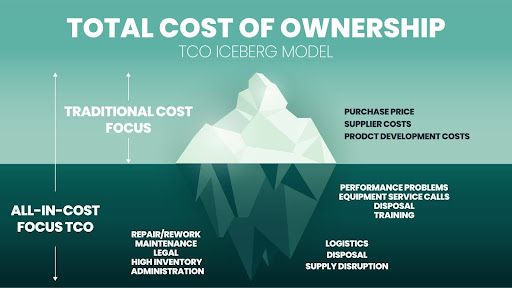
The total cost of ownership (TCO) is an iceberg model concept for cost price and profit analysis. The purchase price of 15 percent above water or surface. The hidden cost of 85 percent is underwater
From my perspective as a CFO, cost optimization in procurement only becomes meaningful when we look beyond headline pricing and focus on long-term value. I often remind teams that the lowest unit price rarely tells the full story. One supplier’s product may appear more expensive upfront, but if it lasts twice as long, consumes less energy, or reduces downtime, the total cost of ownership over its lifecycle can be materially lower.
Total cost of ownership represents not just the purchase price of an asset, but the full spectrum of costs incurred across its useful life operation, maintenance, energy usage, downtime, and eventual replacement. Applying a TCO lens in procurement requires disciplined financial analysis, lifecycle cost modeling, and close collaboration between finance and operations. This approach reflects the broader evolution of the CFO role from scorekeeper to performance architect, a shift that aligns with how modern finance leaders are redefining enterprise value creation, as discussed in the modern CFO as Chief Performance Officer.
When procurement decisions are grounded in TCO, conversations shift from “What is cheapest today?” to “What delivers the best value over time?” This mindset helps avoid false economies such as investing in unreliable equipment or suppliers with long lead times that disrupt operations. Ultimately, a TCO-driven approach ensures cost optimization is sustainable and aligned with performance, quality, and resilience rather than short-lived savings.
Leveraging Digital Procurement Tools and Analytics
Digital technology has fundamentally changed how procurement delivers value. As part of broader digital business and digital transformation strategy initiatives, procurement functions now rely on advanced tools such as e-procurement platforms, spend analytics, AI-driven sourcing, and automated purchase-to-pay workflows. These capabilities sit squarely within digital financial transformation and modern finance strategy.
By automating routine activities and improving data visibility, digital procurement tools reduce manual effort, minimize errors, and uncover savings that were previously hidden. Real-time spend visibility, streamlined approvals, and elimination of paper-based processes allow procurement and finance leaders to make faster, more informed decisions. From a CFO standpoint, these capabilities are essential components of financial planning & analysis (FP&A), and enterprise-wide financial dashboard reporting.
Research consistently shows that organizations that fully deploy digital procurement capabilities can reduce procurement operating costs by up to 45 percent not by slashing spend irresponsibly, but by redesigning processes through automation and analytics. This mirrors the broader finance evolution toward data consulting, data management, and insight-driven execution, an approach often highlighted in discussions around the CFO as a corporate architect shaping scalable operating models, such as those explored in the CFO as corporate architect.
In practice, digital cost optimization involves targeted actions: implementing spend analytics to identify maverick spend, using online sourcing platforms to increase competition, deploying contract management systems to prevent value leakage, and automating invoice processing to reduce errors and cycle times. Advanced predictive analytics further support better demand forecasting and market timing, reinforcing budgeting & forecasting discipline.
The result is a procurement function that is agile, analytical, and strategically aligned, capable not only of saving money, but of informing corporate planning and enterprise decision-making.
Demand Management and Spend Control
One of the most powerful and underutilized for cost optimization is demand management. From a CFO lens, true cost control begins before negotiations ever start. Demand management challenges whether the organization should buy something at all, whether it can buy less, or whether consumption can be optimized.
This approach aligns closely with disciplined financial planning, business management, and effective business growth strategies. Instead of focusing exclusively on price reductions, demand management addresses consumption behavior. It might involve standardizing specifications, strengthening approval workflows, or analyzing usage data to eliminate waste.
I have seen organizations unlock significant savings simply by identifying underutilized software licenses or redundant purchases across departments. Strong demand management practices supported by accurate forecasting and early finance involvement often deliver an additional 5 to 10 percent in sustainable savings beyond traditional sourcing efforts. More importantly, they create a culture of financial ownership across the enterprise.
Demand management is not about saying no it is about making smarter decisions. Whether through shared resources, deferred non-critical spend, or tighter requisition controls, these measures multiply the impact of strategic sourcing. When procurement operates with this mindset, it becomes a strategic partner in innovation and value creation rather than a transactional gatekeeper.
Procurement as a Driver of Sustainable Value Creation
While cost optimization remains important, I measure procurement success by its contribution to long-term value creation. Leading organizations recognize procurement as a driver of innovation, resilience, and sustainability in business.
Strategic procurement supports growth by engaging suppliers as innovation partners. By identifying emerging technologies, materials, and capabilities, procurement helps shape business development strategy, growth strategy, and broader corporate strategy. This external innovation pipeline is increasingly critical in competitive markets.
Procurement also plays a central role in risk mitigation and resilience. Diversifying suppliers, strengthening compliance, and balancing cost with continuity protect the enterprise from volatility. Many leadership teams now accept slightly higher short-term costs in exchange for long-term stability a trade-off that reflects mature strategic management and sound financial advisory thinking.
Sustainability is another area where procurement creates enduring value. Because supply chains account for a significant portion of environmental impact, procurement has direct influence over emissions reduction, ethical sourcing, and supplier diversity. Selecting energy-efficient and responsible suppliers supports sustainable business strategy, enhances brand equity, and often delivers cost efficiencies over time.
The most effective organizations evaluate procurement through a balanced scorecard. Alongside savings, they track innovation contribution, supplier risk, and sustainability metrics. This reinforces procurement’s role as a strategic partner and evolution aligned with how global finance leaders are redefining performance, leadership, and enterprise value, as highlighted in this perspective on global finance leadership.
In summary, procurement becomes a true engine of sustainable value when it is empowered, digitally enabled, and strategically aligned. By applying rigorous financial thinking, embracing technology, and partnering across the business, procurement teams move from buyers to value managers directly supporting growth, resilience, and long-term success.
Cross-Industry Examples of Procurement Value in Action
From my seat as a CFO, I have seen firsthand how strategic management of procurement delivers measurable value across industries. Strategic procurement is not an isolated operational function it is a core pillar of corporate strategy, financial planning, and long-term business transformation. When aligned with leadership priorities, data, and the broader strategic planning process, procurement becomes a driver of performance, resilience, and sustainable growth.
Examining cross-industry examples reinforces how procurement, when embedded into finance strategy and business management, creates value through collaboration, discipline, and data-driven decision-making.
Financial Services: Procurement in Budgeting and Cost Leadership
In the financial services sector, I worked closely with a large European bank where departmental purchasing decisions were fragmented. This siloed approach undermined budgeting & forecasting, diluted accountability, and weakened overall financial planning & analysis (FP&A).
By integrating procurement early into the annual corporate planning cycle, we aligned sourcing decisions with the bank’s financial planning objectives. Through demand management, spend forecasting, and advanced financial analysis, procurement leaders demonstrated to executive leadership how early engagement could prevent unnecessary costs before they hit the P&L.
This shift fundamentally changed procurement’s role from a reactive cost-control function to a trusted business financial advisor and strategic partner. The result was significant annualized savings, stronger financial statement analysis, and a more disciplined approach to enterprise-wide spend governance.
Manufacturing: Supplier Collaboration for Innovation and Resilience
In manufacturing, I have seen how procurement supports business growth strategies when treated as part of the broader business development strategy. A global manufacturing organization facing margin pressure and supply chain volatility redefined its procurement model to focus on strategic supplier partnerships.
Rather than relying solely on price competition, the company identified long-term partners willing to collaborate on design optimization, capacity planning, and innovation. This approach strengthened supply continuity during material shortages while supporting cost optimization through co-engineering and stable pricing structures.
From a CFO perspective, this model delivered more than savings it protected revenue, improved operational resilience, and reinforced a scalable growth strategy aligned with the company’s strategic business plan.
Services Sector: Demand Optimization for Cost Savings
In the environmental services sector, procurement was asked to respond quickly to rising fuel costs. Initial negotiations delivered limited results, so we shifted focus to demand-side analysisan approach I strongly advocate as part of modern financial consulting and management consulting corporate finance practices.
By applying detailed data analytics and total-cost modeling, the team uncovered opportunities to change consumption behavior, transitioning from retail purchases to bulk sourcing and on-site fueling. This demand optimization initiative reduced annual fuel costs by 12 percent.
The key lesson was clear: shaping demand often creates more value than negotiation alone. This is a principle I consistently reinforce when advising boards and executive teams on cost optimization and business transformation.
Cross-Industry Technology Use: Digital Transformation
Across sectors, organizations that embrace digital financial transformation consistently outperform peers. As a CFO, I view procurement technology as a critical enabler of digital transformation strategy and modern digital business models.
A global retailer implemented AI-driven spend analytics and uncovered extensive supplier fragmentation. By consolidating vendors and automating approvals, the organization reduced cycle times and delivered millions in process savings. Similarly, a pharmaceutical company deployed contract lifecycle management technology to prevent value leakage from auto-renewals.
These examples highlight how data management, financial analytics software, and real-time financial dashboards empower procurement teams to deliver measurable value. This is where data consulting and data analytics consultant expertise directly support enterprise-wide business strategy consulting efforts.
Actionable Takeaways and Best Practices
Based on my experience working alongside business consultancy firms, finance management consultants, and executive teams globally, several best practices consistently separate high-performing organizations from the rest.
Align Procurement with Business Strategy
Procurement objectives must mirror enterprise priorities. Whether supporting global expansion through global business services or advancing sustainability in business, alignment ensures procurement earns executive sponsorship and delivers strategic impact.
Adopt a Total Cost Mindset
A focus on total cost of ownership rather than unit price alone supports smarter financial planning, stronger budgeting & forecasting, and improved long-term value creation.
Build Strong Supplier Relationships
Strategic suppliers should be treated as partners. Collaboration, transparency, and joint planning drive innovation, reduce risk, and reinforce sustainable business strategy outcomes.
Leverage Digital Tools and Data
Modern procurement requires advanced analytics, automation, and dashboards. These tools strengthen governance, enhance visibility, and support continuous cost optimization.
Practice Demand Management
Challenging internal demand is one of the most effective levers for cost control. By shaping requirements and standardizing purchases, organizations eliminate waste before it occurs.
Focus on Value, Not Just Savings
From a CFO’s standpoint, value includes risk mitigation, compliance, innovation, and sustainability, not just short-term savings. These broader metrics elevate procurement’s role in strategic management.
Continuous Improvement and Skill Development
Ongoing executive development, analytics capability building, and commercial skill enhancement ensure procurement teams remain agile and effective in changing markets.
Engage Finance and Executives
Strong alignment between procurement, finance, and leadership is essential. When executives clearly understand procurement’s financial and strategic impact, it earns a permanent seat at the table.
Conclusion
Strategic procurement management and cost optimization are no longer tactical exercises; they are fundamental to modern corporate strategy and enterprise value creation. When aligned with financial planning, supported by digital capabilities, and embedded in the broader Business Strategic Planning framework, procurement becomes a competitive advantage.
Organizations that invest in procurement as a strategic function strengthen supply chains, accelerate innovation, and advance strategic sustainability goals. In today’s volatile global environment, procurement leaders must think beyond price and focus on long-term value.
From my perspective as a CFO, the mandate is clear: procurement must evolve from a transactional function into a strategic partner that consistently delivers value across the enterprise. That evolution is not optional it is essential for sustainable success.