

When a multinational organization undertakes a large-scale financial transformation whether that is deploying a new global finance platform, redesigning core processes, or advancing a broader digital financial transformation success often hinges on one understated factor: accountability.
In globally distributed teams, spanning geographies, cultures, and time zones, accountability becomes the connective tissue that keeps the transformation moving forward. It ensures clarity of ownership, consistency of execution, and alignment with the broader corporate strategy. Without it, even the most thoughtfully designed finance strategy begins to fray at the edges.
From my experience, Sumedh Deo as a CFO, accountability is a performance enabler. Research consistently shows that organizations that clearly define responsibility during periods of change are significantly more likely to achieve their strategic objectives. In finance-led initiatives, that clarity is often the difference between a transformation that delivers measurable ROI and one that quietly underperforms.
In this section, I want to explain why accountability is essential for global teams managing financial transformation, how leaders can deliberately establish it, and practical ways to embed accountability across cross-functional and cross-border teams. I will also address the realities global teams face, cultural nuance, virtual collaboration, and decision latency and how accountability mitigates those risks. When paired with strong leadership, accountability keeps complex finance and technology initiatives on track, on budget, and aligned with long-term business goals.
Why Accountability Matters in Global Financial Transformations
At its core, accountability means ownership. Individuals and teams take responsibility for outcomes, decisions, and delivery and are prepared to answer for results. In a finance transformation, whether modernizing financial planning & analysis, improving budgeting & forecasting, or implementing new financial analytics software there are many interdependent workstreams and stakeholders.
Clear accountability prevents execution gaps. It creates transparency, reduces ambiguity, and accelerates decision-making in environments where complexity is the norm. Everyone knows who owns which deliverable, eliminating the familiar and costly problem of shared assumptions and missed handoffs.
In global teams, the risks are amplified. Distributed work, cultural differences, and asynchronous collaboration can quickly erode momentum if roles are not explicit. I have seen situations where teams across regions assumed ownership sat elsewhere, resulting in delays that cascaded through the entire program.
This is why disciplined role definition is essential. Tools such as RACI matrices clearly outlining who is Responsible, Accountable, Consulted, and Informed are execution safeguards. They enable leaders to separate decision authority from task execution and reduce friction across geographies.
Accountability also directly impacts performance outcomes. Teams with clear ownership structures consistently meet milestones, control scope, and manage cost more effectively. Those without it often struggle with rework, overruns, and delayed realization of benefits. In the context of business transformation, that distinction has material financial consequences.
Just as importantly, accountability reinforces standards. When individuals know they are answerable for results, behaviors change. Issues are surfaced earlier, quality improves, and continuous improvement becomes part of the operating rhythm. Over time, this builds a culture focused on outcomes rather than explanations.
Finally, accountability strengthens trust in global teams. While trust is often seen as a prerequisite for accountability, the relationship is reciprocal. When leaders and teams consistently deliver on commitments across regions and time zones/trust compounds.
In high-performing global finance organizations, accountability creates cohesion. Colleagues rely on one another because of demonstrated reliability. That trust is what enables effective collaboration in complex, distributed environments.
From a CFO’s standpoint, accountability is the heartbeat of successful financial transformation, aligning global teams, managing execution risk, and ensuring that strategic intent translates into tangible business outcomes.
Challenges of Accountability in Global Teams
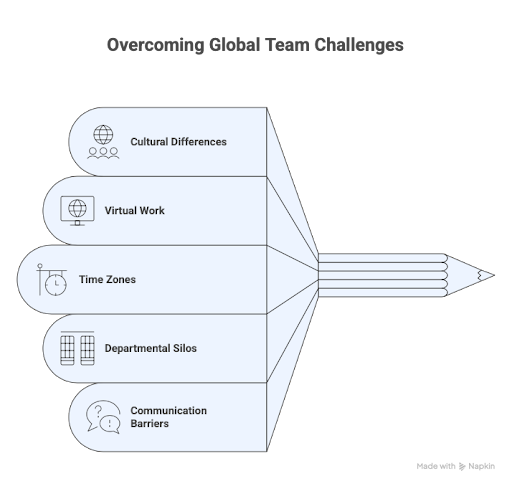
Working across borders and functions introduces unique challenges to building accountability. Understanding these hurdles is the first step to overcoming them:
Cultural Differences
One of the earliest lessons I learned leading global finance organizations is that accountability is not interpreted uniformly across cultures. In some regions, openly calling out a missed commitment is viewed as constructive and professional; in others, it can feel confrontational or even disrespectful. If leaders ignore these nuances, accountability quickly erodes because they are navigating unspoken cultural rules.
Patrick Lencioni captured this dynamic well when he observed that many professionals “shy away from holding their peers accountable” because discomfort outweighs clarity. In multicultural finance teams, this hesitation is often amplified by differences in feedback norms, hierarchy, and attitudes toward authority. Left unaddressed, teams avoid difficult conversations, deadlines slip, and quality quietly degrades. Over time, these small gaps compound into material risks for any financial transformation.
As leaders, we must normalize respectful candor. Accountability means clarity delivered with context and cultural intelligence.
Virtual and Distributed Work
Global finance teams today operate largely in virtual environments, collaborating across continents and time zones. While technology enables scale, it also introduces execution risk. Without physical proximity, miscommunication is easier, urgency can fade, and accountability can feel abstract.
In my experience, distance does not reduce responsibility but poor structure does. When change management lacks regular check-ins, transparent milestones, and visible progress tracking, even highly capable professionals can unintentionally miss commitments. Successful global teams counter this with disciplined governance: frequent touchpoints, shared dashboards, and explicit performance expectations. Recognition also matters. Publicly acknowledging progress in virtual teams reinforces ownership and momentum during long, complex business transformations.
Time Zone and Coordination Challenges
Time zones may seem like a logistical inconvenience, but during a digital financial transformation, they can become a strategic bottleneck. When approvals, decisions, or dependencies stall overnight, delays cascade quickly.
High-performing global teams address this proactively. They design workflows that allow asynchronous progress, establish overlapping hours for critical discussions, and, most importantly, instill the mindset that ownership does not pause at the end of a workday. If an issue will impact downstream teams, accountability means communicating early regardless of geography. This discipline alone can prevent weeks of avoidable delay.
The “Not My Department” Trap
Finance transformations are inherently cross-functional. They span finance, IT, operations, compliance, and often HR. In global organizations, these functions may operate semi-independently across regions, which creates a familiar risk: fragmented ownership.
I have seen transformations stall when teams retreat into functional silos/finance assuming IT will lead, IT waiting for finance direction. This is an accountability gap. The solution is shared accountability, particularly for outcomes tied to financial performance.
When financial targets, system adoption, and operational efficiency are jointly owned by finance and business leaders, behavior changes. Collaboration replaces deflection. Silos dissolve because successor failure is collective. This alignment is foundational to any effective finance strategy.
Language and Communication Barriers
Global teams often operate in a common business language that is not everyone’s first. Add differing communication styles, and misunderstandings are inevitable. When clarity suffers, accountability weakens and finger-pointing fills the void.
Strong global finance leaders invest in simplicity. Decisions are documented. Expectations are written. Teams are encouraged to ask clarifying questions without fear. In my experience, it is always better to pause and confirm than to proceed incorrectly and repair later, this is where executive coaching can help you especially in regulated or data-sensitive finance environments.
Despite these challenges, I have seen accountability thrive across borders when leaders are intentional. Organizations that acknowledge cultural differences, leverage the right collaboration tools, and encourage open dialogue consistently outperform those that rely on structure alone. In such environments, time zones matter less than trust and trust is built through ownership.
The Role of Leadership in Growing Accountability
If accountability is the cornerstone of transformation, leadership is the foundation beneath it. In every major financial and technology transformation I have led, accountability followed behavior not policy. Leaders at every level must model the standards they expect others to uphold.
1. Setting Clear Expectations
Accountability begins with clarity. Global teams can only own outcomes when they understand the vision, priorities, and success metrics of the transformation. Effective leaders articulate why it matters and how each role contributes.
This is where transformational leadership proves its value. When people see how their work connects to enterprise outcomes, personal accountability follows naturally. Ownership increases because the purpose is clear.
2. Leading by Example
Leaders must hold themselves accountable first. In finance transformations, credibility is earned through consistency. When senior leaders visibly track their own progress, admit learning curves, and follow the same rules as everyone else, accountability becomes a shared norm.
I have seen this create psychological safety in the most complex transformations. When leaders own their challenges openly, teams respond with honesty rather than defensiveness.
3. Creating a Blame-Free, Results-Oriented Culture
Mistakes are inevitable in complex transformations. What matters is how leaders respond. If missteps trigger blame, issues will be hidden. If leaders focus on resolution and learning, accountability strengthens.
In finance transformations, early escalation of risks, whether data quality, compliance, or system readiness can save millions. Leaders who reinforce “we solve problems together” see teams step forward rather than retreat.
4. Enforcing and Enabling Accountability
Finally, accountability requires structure. Regular reviews, transparent dashboards, and clear consequences are governance. At the same time, leaders must enable success by providing tools, training, and decision authority.
The most effective finance leaders balance rigor with support. They hold teams accountable for outcomes while removing barriers to execution. That balance is what turns accountability from a constraint into a competitive advantage.
A leader might say, “You are accountable for this outcome, and I trust you to make decisions, and I’m here to remove roadblocks.” This empowering approach promotes self-accountability by team members, as they feel ownership of their roles and the freedom to execute.
5. Shared Accountability Across Departments:
As noted earlier, large-scale financial transformation initiatives involve multiple functions across the enterprise. Leaders at the top must actively break down silos by uniting finance, technology, operations, and other stakeholders under common goals and shared accountability.
One effective way to enable this is by establishing cross-functional steering committees or formal transformation governance boards, often led by the CFO or a senior transformation executive. These forums create a shared decision-making environment where leaders collectively review progress, risks, and dependencies across the global finance transformation roadmap. When, for example, a sales leader and a finance leader both sign off on a target outcome such as a new global pricing strategy rollout they are jointly accountable for delivering the financial and operational results.
This top-down alignment reinforces a powerful message throughout the organization: accountability for financial outcomes is shared, not delegated to a single department. As this mindset cascades downward, teams see that success is measured collectively. In turn, this approach prevents the classic “not my job” syndrome that often undermines cross-functional transformation programs. Everyone, regardless of function or geography, is rowing in the same direction toward clearly defined transformation goals.
In summary, leaders provide the vision, example, and operating environment for accountability to thrive during complex finance and technology transformations. Transformational leadership is about shaping character, behavior, and culture.
When leaders consistently demonstrate accountability, owning outcomes, addressing issues early, and making decisions transparently it cascades through the organization. Middle managers become accountability “bridges,” translating enterprise-level financial transformation objectives into executable team actions and addressing gaps head-on. Front-line employees, observing this consistency, are more likely to take initiative and ownership in their day-to-day responsibilities. The result is a self-reinforcing culture: teams own problems and resolve them proactively.
Building a Culture of Accountability in Cross-Functional Teams
Creating a culture of accountability in a global, cross-functional finance transformation team requires deliberate design, disciplined governance, and consistent leadership behaviors. Below are practical strategies to embed accountability into the operating DNA of your transformation program.
1. Define Clear Roles and Responsibilities (No Guesswork):
Accountability begins with absolute clarity around ownership. At the outset of any financial transformation, leaders should map key workstreams and assign a single, clearly accountable owner for each outcome. Tools such as the RACI matrix remain highly effective in global transformation contexts. By documenting who is Responsible, Accountable, Consulted, and Informed for each deliverable, organizations create transparency and reduce execution risk.
This clarity eliminates the common failure mode where “everyone assumes someone else is accountable,” resulting in critical activities falling through the cracks. With a well-governed accountability framework in place, even highly complex, globally distributed teams can coordinate effectively without duplication, confusion, or delays.
2. Establish Goals and Metrics Together:
Accountability strengthens when teams help define the goals they are expected to deliver. In cross-functional financial transformation initiatives, bring Finance, IT, Operations, and other stakeholders together to align on shared outcomes. Examples include KPIs such as system adoption rates, reductions in manual reporting effort, close-cycle acceleration, or improvements in data accuracy and control.
Once goals are agreed, define how progress will be measured and reviewed. Regular KPI tracking and milestone reporting ensure accountability translates into measurable results. When each region or function knows it will be reporting performance metrics at a global governance forum, accountability becomes real and sustained. Shared dashboards and scorecards further reinforce peer accountability and transparency across the transformation program.
3. Encourage Peer Accountability and Open Feedback:
A mature accountability culture operates horizontally. Team members should feel empowered to hold peers accountable for commitments, quality, and timelines. This is often challenging in global teams due to cultural norms and conflict avoidance, but the payoff is significant. Constructive peer feedback surfaces issues early and prevents small execution gaps from becoming material transformation risks.
Leaders play a critical role by normalizing open feedback and reinforcing that accountability conversations are about delivery and outcomes. When trust is present, peer accountability becomes a strength rather than a source of friction. Over time, teams evolve into self-correcting systems that consistently uphold high performance standards.
4. Combine Structure with Personal Ownership:
Effective accountability rests on two pillars: governance structure and personal ownership. Structural accountability includes steering committees, reporting cadences, escalation paths, and clearly defined decision rights. These mechanisms ensure visibility, consistency, and control throughout the financial transformation lifecycle.
Equally important is bringing in personal accountability. Team members should be encouraged to think like “mini-CFOs” or “owners” of their domain responsible for delivering outcomes. Empowering individuals to make decisions, raise risks early, and propose improvements builds an ownership mindset that accelerates transformation success.
When structural rigor is combined with personal ownership, accountability becomes embedded. Teams move from execution mode to outcome orientation co-owning the transformation rather than waiting for direction.
5. Use Accountability to Drive Cross-Functional Collaboration
In my experience, the real successes and failures of finance transformation programs rarely sit neatly within one function. They occur at the intersections: where Finance depends on IT for data integrity, where Technology relies on Finance to define controls, reporting logic, and regulatory requirements. This is where accountability either compounds value or quietly erodes it.
Effective leaders deliberately design accountability across these intersections. One of the most practical levers is early and continuous stakeholder engagement. Bringing executives, functional heads, and key regional leaders into the conversation early creates alignment on outcomes. When expectations are clear upfront, accountability extends beyond the core project team and into the broader enterprise. That reduces late-stage surprises, scope disputes, and rework each of which carries a real cost.
I have also seen strong results from shared ownership models. Pairing a finance lead with a technology lead to jointly oversee a major workstream such as a global reporting platform or ERP rollout creates natural checks and balances. Neither function can disengage without it becoming immediately visible. Shared accountability forces collaboration, accelerates decision-making, and significantly lowers execution risk in complex, cross-functional financial transformations.
6. Introduce Transparency and Disciplined Communication
If accountability is the backbone of transformation, transparency is its circulatory system. In global finance teams, open and structured communication is non-negotiable. Regular updates whether through weekly executive reviews, regional stand-ups, or enterprise-wide dashboards create a rhythm of accountability that keeps momentum intact.
Transparency normalizes honesty. When teams openly communicate what is on track, what is delayed, and where support is needed, it becomes acceptable to surface issues early rather than conceal them. From a CFO’s perspective, early visibility into risks is far preferable to late-stage surprises that impact cost, compliance, or credibility.
Publishing progress metrics especially in global transformations creates healthy pressure. When regional teams know their status is visible to peers and leadership, accountability sharpens. Just as importantly, transparency ensures success is recognized and reinforced. High-performing teams should be seen.
Structured retrospectives at key milestones are another discipline I strongly advocate. Conducted properly, they reinforce accountability without blame. The message is simple: we are accountable for learning and improving with each phase. That mindset compounds value over time.
7. Leverage Technology but Anchor It in Culture
Modern finance transformation initiatives are inseparable from technology. Dashboards, workflow tools, and AI-enabled reporting systems bring much-needed visibility to tasks, timelines, and dependencies. Used well, they automate elements of accountability by flagging delays, highlighting bottlenecks, and surfacing performance trends.
However, technology does not create accountability, leadership and culture do. Tools only work when expectations around their use are explicit and enforced. In high-performing global teams, updating task status, risks, and milestones is part of the accountability contract.
Leaders should actively reference these tools in governance discussions. When dashboards inform conversations “This metric is off target; what is the corrective plan?” accountability moves from abstract expectation to operational reality. This integration of technology with disciplined leadership is what turns data into execution.
When these practices are implemented consistently, organizations build a durable accountability framework: one where ownership is clear, outcomes matter more than activity, and individuals are supported by both structure and peers.
Benefits of a Strong Accountability Culture in Transformation
Accountability is often discussed as a value, but its real importance lies in measurable outcomes. When global teams manage financial transformation with discipline and ownership, the benefits are tangible.
Higher Project Success Rates:
Transformations with clear accountability structures are far more likely to deliver on scope, schedule, and budget. Milestones are met, risks are surfaced early, and initiatives avoid drifting into the category of “strategically sound but operationally underwhelming.” From a CFO standpoint, this directly protects capital investment and credibility with the board.
Faster Decision-Making and Issue Resolution:
When accountability is explicit, decisions do not stall. Ownership eliminates inertia. Issues are addressed by the right people, at the right level, without unnecessary escalation. The result is a faster, more confident transformation cycle, something every executive values under time and cost pressure.
Improved Financial and Operational Performance:
Accountability sharpens financial discipline. Budget owners manage costs more rigorously. Process owners drive efficiency more aggressively. When finance and operations share accountability for outcomes, transformation targets cost savings, margin improvement, cycle-time reduction are achieved through coordinated effort rather than functional negotiation.
Stronger Engagement and Trust:
Contrary to popular belief, accountability improves morale. Clear expectations allow strong performers to excel and be recognized. Ambiguity disappears. Teams trust each other because commitments are honored and issues are addressed directly. Over time, this builds a culture of mutual respect and professional pride.
Greater Agility and Innovation:
Accountable teams take ownership for results and for improvement. When individuals are empowered to own outcomes, they innovate finding smarter processes, leveraging automation, and adapting quickly when conditions change. This agility is critical in modern, technology-led finance transformations.
From where I sit, the importance of accountability in global teams managing financial transformation cannot be overstated. It is the mechanism that converts strategy into execution, governance into outcomes, and ambition into measurable value.
Organizations that invest in building this culture do more than complete a single transformation successfully. They create teams capable of navigating continuous change with discipline, confidence, and long-term strategic advantage.
Conclusion: Accountability as a Catalyst for Transformational Leadership
Having led multiple global financial transformations, I encourage you to connect with me now and help you with your finance transformation. I can say this with confidence: complexity is inevitable, chaos is optional. Technology shifts, process redesigns, regulatory pressures, and globally distributed teams will always introduce friction. What determines whether that friction produces momentum or failure is accountability.
Accountability brings structure to complexity. When roles are clear, ownership is explicit, and outcomes are non-negotiable, teams move with purpose. Accountability aligns daily execution with strategic intent and sustains momentum through the most difficult phases of change, when fatigue sets in and early enthusiasm fades.
For leaders driving finance and technology transformation, building accountability is a leadership responsibility. It starts with transformational leadership grounded in personal accountability. Leaders who are transparent about commitments, disciplined in follow-through, and honest about setbacks establish credibility. That credibility becomes the foundation on which teams are willing to take ownership themselves.
When accountability works, it feels like trust. It is the shared understanding that we are aligned on outcomes, clear on expectations, and committed to helping one another deliver. In mature organizations, accountability replaces micromanagement and eliminates blame. It shifts conversations from who failed to how we recover and improve.
Importantly, accountability is a journey that evolves with the organization. It may require new governance mechanisms, clearer KPI dashboards, formal tools like RACI matrices, and often the courage to have candid conversations across cultural and hierarchical boundaries.
The payoff is substantial. Organizations that embed accountability do more than complete a financial transformation; they emerge with stronger leadership benches, tighter execution discipline, and teams capable of navigating continuous change. Accountability turns ambition into results and strategy into sustained performance.
In an environment where change is constant and scrutiny is high, an accountable global team is a competitive advantage.
FAQs: Accountability in Global Teams & Financial Transformation
Q1: What does accountability mean in a global team context?
In a global team, accountability means clear ownership of outcomes across regions, functions, and time zones. It goes beyond task completion. Accountability requires ensuring that the agreed business objective is delivered, regardless of how many stakeholders contribute along the way.
In practice, accountability sits with one owner per outcome. If you are accountable for a month-end financial report, it is your responsibility to ensure inputs are coordinated, issues are resolved, and the output meets quality and timing expectations. In global finance teams, accountability also demands proactive communication. Progress, risks, and delays must be surfaced early, despite geographic or cultural distance.
This clarity eliminates ambiguity, strengthens coordination, and ensures that global teams operate as one enterprise rather than fragmented regional units.
Q2: Why is accountability so important in financial transformation projects?
Financial transformation initiatives ERP implementations, reporting automation, process redesigns are capital-intensive, high-risk, and highly visible. Accountability directly influences whether these investments deliver return or erode value.
Strong accountability drives proactive behavior. Issues are addressed early, decisions are made faster, and cost and scope are controlled. Weak accountability, by contrast, leads to delays, duplication, rework, and compliance exposure.
From a CFO’s perspective, accountability also underpins data integrity and control effectiveness. Clear ownership over financial data, system configuration, and controls reduces the risk of errors and regulatory breaches. Moreover, shared accountability across finance, IT, and operations ensures transformation benefits are realized at the enterprise level.
Simply put, accountability is the steering mechanism that keeps a financial transformation on course.
Q3: How can leaders promote accountability during a financial transformation?
Leadership behavior sets the ceiling for accountability. Leaders must begin by defining a clear vision, measurable goals, and explicit ownership for every major deliverable. Ambiguity is the enemy of accountability.
Equally important is leading by example. When leaders meet their commitments, acknowledge missteps, and communicate openly about progress, they normalize accountability throughout the organization. Structured governance, regular reviews, milestone tracking, and transparent reporting reinforces this discipline.
High-performing leaders also cultivate a blame-free, solution-oriented culture. In complex transformations, problems are inevitable. Teams must feel safe surfacing risks early. Recognition matters as well. When individuals or teams step up to own challenges and deliver results, acknowledging that behavior reinforces accountability as a shared value.
Q4: What are effective strategies to build accountability in cross-functional teams?
Cross-functional accountability requires both structure and intent. A few proven approaches include:
- Define ownership with a RACI framework: Clearly map who is Responsible, Accountable, Consulted, and Informed for each major outcome. This removes confusion and accelerates execution across finance, technology, operations, and regional teams.
- Set shared goals and KPIs: Agree on enterprise-level objectives such as closing-cycle reduction, reporting accuracy, or automation adoption and track progress transparently. Shared metrics introduce collective ownership and discourage siloed behavior.
When accountability is embedded this way, cross-functional teams shift from coordination overhead to coordinated execution. The result is faster delivery, stronger outcomes, and a transformation that creates lasting organizational capability.
– Establish regular communication rhythms: Hold joint check-in meetings where each function reports status. A short weekly sync can work wonders. This surfaces interdependencies.
If marketing is waiting on finance for something, it will come up. Regular communication builds trust and makes it natural for team members to alert each other to issues.
– Encourage mutual accountability and support: Leaders should encourage team members to hold each other accountable respectfully. If operations notices a delay in a finance task that affects them, they should feel free to raise it directly (and politely) with the finance counterpart, rather than suffering in silence or running to upper management immediately.
Teach the team that it’s everyone’s responsibility to ensure the project succeeds. Often the people closest to the work spot problems first; if they’re empowered to speak up and help each other, you catch issues early.
– Leadership support and escalation paths: Ensure there is a clear, friendly path for escalating issues. If a team member has tried to get a delayed task back on track but is not getting cooperation, they should know they can approach the project leader for help without blame.
Leadership should act as a coach and arbiter, stepping in when needed to realign responsibilities or provide extra resources. Knowing that support is there actually makes team members more confident in taking accountability.
By implementing these strategies, cross-functional teams create a web of accountability: everyone knows their piece, is aware of how it connects to others, and actively communicates to keep the whole project moving smoothly.
Q5: How does accountability impact the success of a finance & tech transformation?
A: Accountability has a direct, positive impact on the success of any finance and technology transformation. Firstly, it drives completion and quality. Accountable teams deliver on their tasks and double-check their work because they know they are answerable for the outcomes. This means the new systems or processes being implemented are more likely to work as intended, without last-minute firefighting due to negligence. Secondly, accountability ensures timely execution.
Each phase of the transformation (design, testing, deployment, etc.) has owners who keep things on schedule or flag early if a deadline will slip. This proactive management often keeps the overall project on its timeline, or at least minimizes delays.
Financial transformations also often have significant cost implications (new software, training, etc.), so staying on schedule and avoiding rework benefits of accountability translate to financial savings. Thirdly, accountability induces adoption and sustainability.
After go-live, the new processes or technologies need to be embraced by the organization. If the project team had a culture of accountability, they likely also focused on training users, getting feedback, and ensuring each department took ownership of using the new tools.
This means the transformation’s benefits (like efficiency gains or better data) actually materialize and last. Without accountability, even a technically successful implementation can falter if people don’t use the system properly or revert to old ways. Lastly, accountability influences the human factor. A successful transformation revolves around people working together in new ways.
An accountable team that collaborated well will have built trust and learned a lot through the process, leaving the organization with a stronger team ready for the next challenge. In summary, accountability is a critical ingredient that keeps a financial transformation on target, on budget, and yielding the desired business outcomes, from improved financial controls to faster analytics for decision-making.